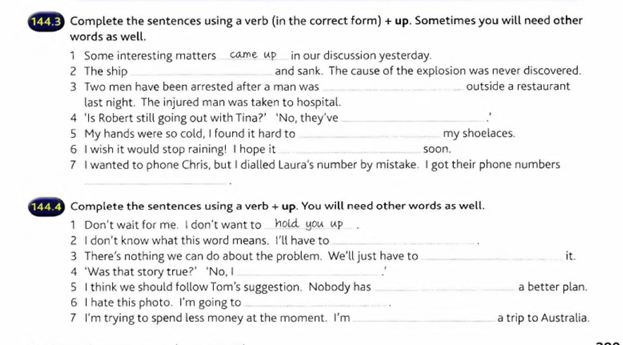
Today is the first class of our new December class period. The start time for our class will be 10:00am. We will begin class with a casual conversation. Our reading today is about Shubert. Please try to read as much as possible. Underline any words or sentences that are unfamiliar. Our listening is about “A Man on the Inside”. Please listen and read the transcript. We will complete our grammar sentences.
Click HERE for the reading
AISHA HARRIS: The charming sitcom A Man on the Inside stars Ted Danson as a lonely widower who's hired by a private investigator to live undercover in a senior living facility. The mission? Find out who stole a precious item from one of the residents.
STEPHEN THOMPSON: It's an out-there premise, but it's also a tender and poignant depiction of loss, aging, and finding community. In other words, it's exactly what we've come to expect from creator Michael Schur, who, among other wonderful things, previously brought us to The Good Place. The series just came back for a second season, so we thought it was a perfect time to revisit our conversation about the show. I'm Stephen Thompson.
HARRIS: And I'm Aisha Harris. And today, we're talking about the Netflix series, A Man on the Inside on Pop Culture Happy Hour from NPR.
HARRIS: It's just the two of us today. In A Man on the Inside, Ted Danson plays Charles, a retired engineering professor and recent widower. His daughter, Emily, is played by Mary Elizabeth Ellis. And she encourages him to take up a new hobby to stave off his loneliness. Inspired, Charles answers a want ad posted by a private investigator. Apparently, a resident at a nearby senior living facility has had her necklace stolen, and Charles is hired to embed as a mole and track down the culprit.
[AUDIO PLAYBACK]
CHARLES: I gave my spy persona a trademark. Spy Charles wears a pocket square. That's how you'll know that I'm in spy mode. Regular Charles. Spy Charles. Regular. Spy Charles.
[END PLAYBACK]
HARRIS: As he morphs into this amateur detective, he befriends and sometimes clashes with the quirky staff and residents at Pacific View Retirement Home, and he also confronts his own grief. If the setup here sounds vaguely familiar, that's because it is. The show's creator, Michael Schur, was actually inspired by the really, really good Oscar-nominated documentary, The Mole Agent. A Man on the Inside is streaming on Netflix now. And Stephen, look, I have still yet to watch a movie with you, but I do know-- there's this fact about you-- that you tend to be a blubbering mess--
THOMPSON: Just in general.
HARRIS: --when it comes to--
THOMPSON: Just in general, not even when I'm watching things.
HARRIS: Just in general, but like, you know, when a movie or a show hits you right in the sweet spot. And this show feels like that kind of experience. Did it hit you in all the feels? How do we feel about this show?
THOMPSON: Oh, my god. Aisha, first of all, you've known me for a long time. You're asking me a question to which you already know the answer.
HARRIS: I know. I know.
THOMPSON: I cried watching the trailer for this show. It's not necessarily, like, tugging that hard all the time.
HARRIS: No.
THOMPSON: I teared up watching it because it was like, oh, I need this. I need a new Michael Schur show. I need Ted Danson. I need lots and lots of little Good Place Easter eggs. I need all these character actors who pop up on this show, whom I love so dearly. On a very long ago episode of Pop Culture Happy Hour, when we talked about kind of pop culture figures we wanted to defend who we felt had gotten a bad rap, I talked about Sally Struthers--
HARRIS: Sally, yes.
THOMPSON: --and how much I love Sally Struthers and how much Sally Struthers does not get the credit that she deserves.
[AUDIO PLAYBACK]
VIRGINIA: You are tall.
MAN: Thank you.
VIRGINIA: Is that your real hair?
[END PLAYBACK]
THOMPSON: Stephen McKinley Henderson-- man, you and I have talked about our fandom for Stephen McKinley Henderson before.
HARRIS: Yes, yes.
THOMPSON: He's one of those character actors who, every time he pops up, I'm happy to see him. There are certain character actors who have this effect of, like, oh, it's my old friend. And I have that experience watching him. This show delves into kind of his friendship with the Ted Danson character. I found it enormously moving.
[AUDIO PLAYBACK]
CALBERT: I worked at the Pentagon.
CHARLES: Get out of here.
CALBERT: I like to say that before I tell people what my actual job was. I was in food service. I managed the cafeteria.
CHARLES: [CHUCKLES] That's neat. Did you have a cool badge?
CALBERT: I had a cool badge.
[END PLAYBACK]
THOMPSON: It's not necessarily that it's fall-down funny. It is funny, but mostly is, it's just a good hang.
HARRIS: Yeah.
THOMPSON: Man, Thanksgiving. If you're hanging with your family for Thanksgiving, put this show on. This show will make you feel better, even though there are elements of it that are poignant and sad.
HARRIS: Yes, this is filling the void that I felt when Grace and Frankie ended.
THOMPSON: Mm-hmm.
HARRIS: Look, I love me a show that is focused on the challenges of aging, but also doing so in a fun, lighthearted way. And the same way that that show-- that was, of course, another Netflix series that starred Jane Fonda and Lily Tomlin as friends who are kind of navigating seniorhood. And this one, it gets at that. It really-- What I like about the way this show is, is that-- and Mike Schur has talked about this. But like, it's not quite a workplace comedy. It's also not-- in the way that The Good Place is sort of, like, this look at the afterlife, like, this is like that in-between. This is a community. This is an environment where you see all levels of interactions and dynamics. You've got the staff. You've got Stephanie Beatriz.
[AUDIO PLAYBACK]
DIDI: So everybody happy?
VIRGINIA: No.
DIDI: Well, you're never happy. But are you at least back to your baseline level of unhappiness?
[END PLAYBACK]
THOMPSON: Using her real voice and not the one she used on Brooklyn Nine-Nine?
HARRIS: I know, which I didn't realize wasn't her real voice.
[LAUGHTER]
HARRIS: It's so-- it's so interesting to see her playing a very different character from Rosa on Brooklyn Nine-Nine. And here, she is playing Didi, who is the director of the retirement home. It really gets at what I imagine is the daily stressors of working in that kind of environment. Like, she has moments where she's-- she's calm. She's trying to navigate various residents who might have some differing opinions, who might be clashing. And then she just, like, finds time to go and slip into her office and lay on the ground and, like, put on headphones and just, like, zone out. And that's her time. And I love those little moments and how it really treats this fact of life that many of us will have to go through, whether directly or through caring for family members in our lives. It really treats it as something that is important and messy and hard to deal with, but also really funny. I love the sort of interaction between John Getz, who plays Elliott, and Charles, the Ted Danson character, because they start to have, like, a little bit of a beef-- at least Elliott has a beef with Charles. And at one point, he calls him his sexual rival because [LAUGHS] him and the Sally Struthers character had a thing. And now, Charles might be interrupting that thing.
[AUDIO PLAYBACK]
ELLIOTT: You tried to steal my woman, and you couldn't, so you stole my watch.
VIRGINIA: I'm not yours to steal! And nothing happened.
ELLIOTT: Something happened, all right. My watch was stolen by my sexual rival.
[END PLAYBACK]
HARRIS: There's just so much fun here. It's just delightful.
THOMPSON: Yeah. And it's just, the hallmarks of a Michael Schur comedy are, like, deep empathy, including for secondary characters, and also a willingness to provide a redemption arc for people that you don't expect to get redemption arcs. And he is a maker of TV who really believes in humanity and really wants to believe in humanity.
HARRIS: Yeah.
THOMPSON: And so if that's what you're looking for right now, this is just right there for you. And it's so digestible.
HARRIS: Yeah.
THOMPSON: This entire thing is four hours long, doled out in half-hour increments. It's not necessarily, like, hitting you with cliffhangers that are making you mash that Next Episode button, but it's full of, like, no, I want to hang out with these people for another half-hour. No, I can do another half-hour hanging out with these people. I blew through this show very quickly. I did not dole it out to myself.
HARRIS: Yes, I watched it in one day--
THOMPSON: Yeah.
HARRIS: --two sittings, four episodes each. But it is really that easy. And another thing that I sort of latch onto with this show is the fact that the Ted Danson character, Charles, there's a way-- you know, I mentioned the sexual rival, as they refer to it, and, like, a possible love triangle. But that's not what this show is really interested in.
THOMPSON: Right, no.
HARRIS: You know, Charles is a character who-- the show establishes from the beginning he was, like, the less outgoing of the couple, of his late wife. His late wife was the one who was very just, like, into the world, loved to do things. And the show starts out with him being-- feeling like, you know, he doesn't know what to do with himself. And I think this show really gets at this idea of loneliness in old age and how to reckon with that. And I love the way-- like you said, there's this human quality to it that it's not saccharine. Like, it treats it in a real way. But it really does tug at the heartstrings. I love the relationship between Charles and Emily, his daughter. She is trying to get him to open up. And they have a really just, like, honest conversation. This entire situation forces them to have honest conversations about his late wife and the fact that this show also is very much dealing with the idea of dementia and not being yourself and losing yourself to that kind of illness. I think a lot of people who have dealt with that will really the way this show highlights such a common part of life. It reminded me a lot of my grandfather, who, in his last years, had just become a shell of himself. And that was the part that, you know, any time that was sort of mentioned and becomes sort of integral to the storytelling, that is when I was feeling, oh, man, this is a lot. This is a lot. But every time that happens, Mike Schur and his writers find a way to sort of pull it back and make light of it, but in a good way.
THOMPSON: In a good way. I mean, you're in such good hands here.
HARRIS: Yeah.
THOMPSON: I kept finding common threads between this show and The Good Place. One of the messages of that show is that it is never too late to be better.
HARRIS: Yeah.
THOMPSON: It is never too late to improve. It is never too late to grow. And that message is really central to this show, right? Like, you know, he is of an age. He is retired. He can plausibly fit in at a retirement community. But he still has stuff he needs to work on. And the people who are in this retirement facility still have stuff they need to work on. And they are working on it. And I think that is such a valuable reminder that, like, it's never too late to do the work. It's never too late to mend fences and repair yourself and repair your relationships and reach out to other people and push back against the parts of you that shrink your own world. And so I found this show really inspiring, on top of it being a good hang.
HARRIS: Yeah. We haven't even mentioned Margaret Avery, the wonderful Margaret Avery, who is probably best known for--
THOMPSON: Oh, god.
HARRIS: --playing the role of Shug Avery in The Color Purple, the 1985 version. But she plays Florence. And her and the Sally Struthers character, Virginia, are, like, besties inside the retirement home. And their friendship is just so sweet. And to your point, Stephen, about sort of, like, never-- like, it not being too late for you to change, there's a great moment where Florence makes this extravagant purchase for herself that she never would have done before in her life. And she's just like, huh, maybe I do like this.
THOMPSON: Right.
HARRIS: Like, she had to, like, allow herself to be happy, in a way. And I don't know. I'm, like, almost tearing up, thinking about it. But I'm just like, oh, man. Like, I hope, you know, when I'm in my old age, and, like, when my parents are in their old age, and if they ever had to be in that sort of environment, that, like, this feels like an idealist-- like, an idyllic version.
THOMPSON: This is the most hopeful.
HARRIS: This is the most hopeful outcome. This is actually The Good Place. Like-- [LAUGHS] I realize that a lot of facilities are not like this. But you know what? Sometimes you just need a little bit of a fantasy, Or like, you need art to create things that we hope to be. And I just think the way that this show really imagines, like, the best possible scenario for all of these people living together and clashing, yes, but also finding common ground, it's just like-- I don't know. There's just something really lovely about it. And we've talked a lot about, obviously, the idea of aging here, but it's also just a fun sort of spy-ish comedy. Like-- [LAUGHS]
THOMPSON: Oh, there is also a mystery. And it's a mystery that they do solve, but it is also a show that, in eight half-hour episodes, does character building for, like, a dozen different characters and gives you a real sense of who these characters are and why they are the way they are. In the very first episode of this show, as we meet Charles, we're getting so many subtle pieces of character building, the stuff about, like, how he had, like, taken his wife's stuff and sealed them in Rubbermaid containers, every one of them clearly marked, like, gives you such a sense of who he is and how he compartmentalizes his life. You see him, like, making his morning coffee and how fastidiously he's kind of sorting everything in order to put his life in the exact order he wants it. And you just very quickly get a sense, I know who this is.
HARRIS: Yeah.
THOMPSON: Over the course of the show, you're getting filled in with a little bit more details about him. It is a really subtly sophisticated piece of storytelling on top of being just great, great fun.
HARRIS: Also, just the little moments, like the regular community meetings where--
[LAUGHTER]
HARRIS: --before they even start, they have to unwrap all their candies.
[LAUGHTER]
HARRIS: Just the little details that poke fun at what it might mean to grow old.
[AUDIO PLAYBACK]
WOMAN 1: All the food is too salty.
[APPLAUSE]
WOMAN 2: None of the food is salty enough.
[APPLAUSE]
[END PLAYBACK]
HARRIS: I don't know. I don't know what else to say.
THOMPSON: Yeah.
HARRIS: It's just so delightful. That is our ringing endorsement.
THOMPSON: Yes.
HARRIS: And once you've had a chance to check it out-- which you absolutely should-- let us know what you think about A Man on the Inside. Find us at facebook.com/pchh. And that brings us to the end of our show. Stephen Thompson, thanks so much for being here. I am so glad I got to talk about the show with you.
THOMPSON: Oh, me, too, buddy. Thank you.
HARRIS: And this episode was produced by Liz Metzger and edited by Mike Katzif. Our supervising producer is Jessica Reedy. And Hello Come In provides our theme music. Thanks so much for listening to Pop Culture Happy Hour from NPR. I'm Aisha Harris. We'll see you all tomorrow. Oh, man, I really did almost start crying.
THOMPSON: Me, too.
HARRIS: I was like, oh!