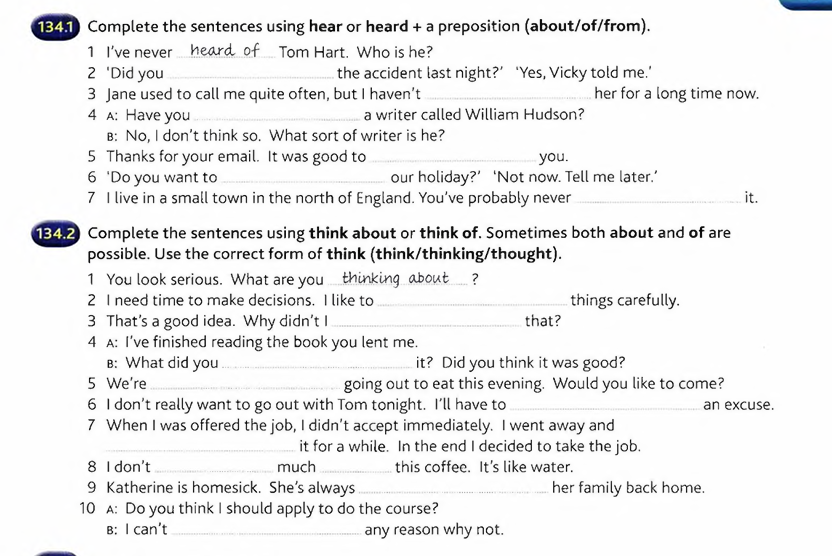
Today is the last class of our current September four class set. The start time for our class will be 10:00am. We will begin class with a casual conversation. Our reading today is about Kosmos. Please try to read as much as possible. Underline any words or sentences that are unfamiliar. Our listening is about Indian traffic. Please listen and follow the transcript. We will complete our grammar sentences. I will introduce a new vocabulary exercise.
Click HERE for the reading
Indian cities are noisy, very noisy. So how does a driver get the attention of other drivers? By playing songs by BJ Liederman who writes our theme music or by honking their horns? Problem is, they're often drowned out by all the clamor of other horns. As NPR's Omkar Khandekar reports from Mumbai, drivers are now trying to beat the noise by buying louder horns. And remember, you'll hear some car honks in this story.
OMKAR KHANDEKAR, BYLINE: On a sweaty afternoon this August, I stepped out of NPR's Mumbai bureau for a not-so-scientific experiment.
I'm at a busy traffic intersection in suburban Mumbai right now. I want to count the number of times that vehicles here honk in a span of a minute.
(SOUNDBITE OF HORNS HONKING)
KHANDEKAR: Listeners, I counted people honking 27 times. Cars, bikes, trucks, tuk-tuks, they all did it. They honked at pedestrians and each other. They honked to beat the signal or when the signal beat them. It made your head hurt, your heart race. But traffic constable Vikas Rahane says this noise level is normal here.
VIKAS RAHANE: (Non-English language spoken, laughter).
KHANDEKAR: He says the evening peak hour traffic rings in his ears for hours. Sometimes he can't sleep. It's caused hearing loss in some of his colleagues.
Now, Rahane can penalize people for honking violations - up to $25 for beeping too much. But his senior officer Subhash Shinde tells me Mumbai's roads are so chaotic, police only have the bandwidth to keep the traffic moving.
SUBHASH SHINDE: (Non-English language spoken).
KHANDEKAR: Honking, he says, is not even in the top five priorities.
A government study in 2018 found that the average noise in six of India's metropolises like Mumbai is more than 80 decibels. The World Health Organization says it shouldn't exceed 55 decibels during the daytime. That's like listening to a noisy vacuum cleaner all day long...
(SOUNDBITE OF VACUUM CLEANER)
KHANDEKAR: ...But louder. That noise comes from a few sources. Mumbai is constantly under construction. Builders are flinging up high-rises all over the city of 20 million. Day and night, workers dig up roads and lay down more. That clogs up the city streets and drives people nuts.
SUMAIRA ABDULALI: Many people in India believe it's impossible to drive without honking because if you don't honk, no one will move out of your way. But as the fact is, when everyone's honking, no one moves out of your way anyway.
KHANDEKAR: Sumaira Abdulali is the founder of the environmental group Awaaz Foundation that focuses mainly on sound pollution issues.
ABDULALI: The horns go up to 120 decibels and sometimes even a little bit more than that. And they are definitely getting louder, and the quantum of honking is more.
KHANDEKAR: Mumbai's drivers don't settle for a standard-issue horn. Many go out of their way to purchase extra-loud ones in places like CST Road marketplace in the suburbs.
(SOUNDBITE OF HORNS HONKING)
KHANDEKAR: Hundreds of shops here are cramped along half a mile of bumpy road with cackling traffic. They specialize in automobile spare parts, including horns. They offer drivers a few options. There's the flat one.
(SOUNDBITE OF FLAT HORN HONKING)
KHANDEKAR: The punchy one.
(SOUNDBITE OF PUNCHY HORN HONKING)
KHANDEKAR: And the musical one.
(SOUNDBITE OF MUSICAL HORN HONKING)
KHANDEKAR: One shop owner, Noor Mohammed, says what most drivers want is something loud. They call these the pom-pom horns.
NOOR MOHAMMED: They only need the pom-pom. Low voice, they didn't prefer.
KHANDEKAR: A new pom-pom horn costs about 10 U.S. dollars and can last up to a year. And because there's such demand for vehicle horns, it has spawned a league of horn reviewers online.
(SOUNDBITE OF ARCHIVED RECORDING)
UNIDENTIFIED VLOGGER: So, hey, guys. Welcome back to my channel. Finally (non-English language spoken).
KHANDEKAR: Gagan Chaudhary runs the automobile news website Gaadify. He says vehicle manufacturers understand the needs of Indian drivers. Some motorbike makers have made their horns louder in recent years, and some carmakers have made their horns punchier, with more bass.
GAGAN CHOUDHARY: In India, the use of horn in general is, I think - let's put it that it's 100 X than whatever we've seen in developed countries.
KHANDEKAR: But all these louder and more durable horns don't seem to have increased road safety. More than 150,000 people die on India's roads every year, according to the government. So a few years ago, India's road minister, Nitin Gadkari, proposed a solution to the country's noise crisis.
NITIN GADKARI: (Non-English language spoken).
KHANDEKAR: To replace vehicle horns with ones that play Indian classical wind and percussion instruments like flute...
(SOUNDBITE OF FLUTE PLAYING)
KHANDEKAR: ...Or harmonium...
(SOUNDBITE OF HARMONIUM PLAYING)
KHANDEKAR: ...So it's not as hard on the ear. Environmentalist Sumaira Abdulali says that would be a disaster.
ABDULALI: I can only imagine what's going to happen then when you have various types of music blaring because somebody is bored or unhappy or, you know, whatever.
KHANDEKAR: Abdulali says a better solution would be to see noise as a public health issue and combat it by enforcing laws and promoting civic sense.
ABDULALI: Indians have a great capacity for change, and they can change, and they will change.
KHANDEKAR: Until that happens, Abdulali says she will keep raising her voice and hope that someone hears it above the din.
Omkar Khandekar, NPR News, Mumbai.
(SOUNDBITE OF RAIGA'S "COBALT WAVES")