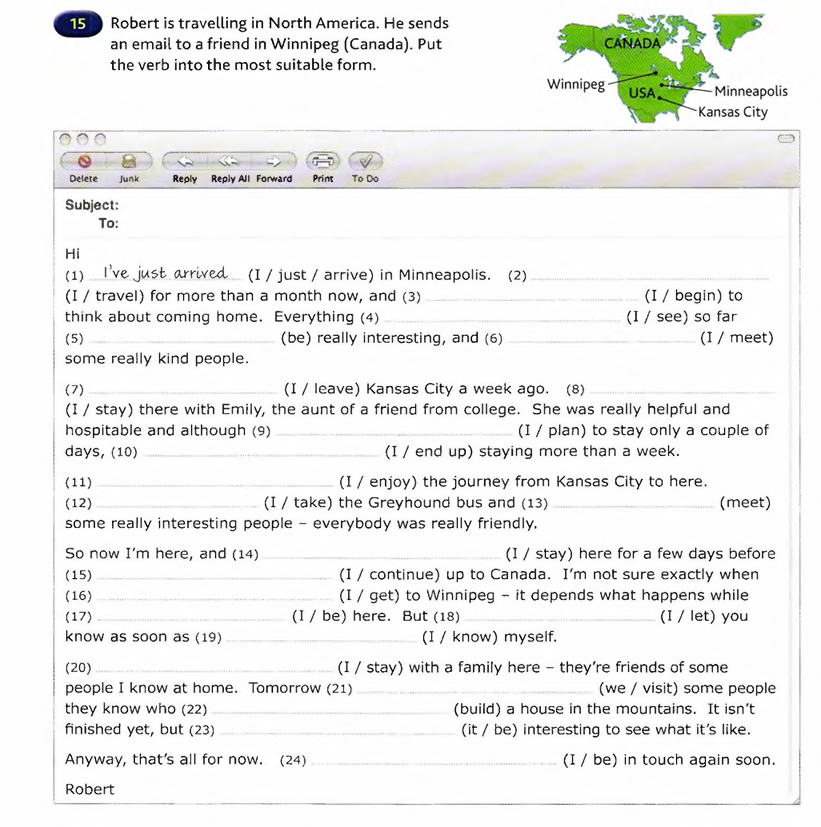
Today is the first class of our new April class period. The start time for our class will be 10:00am. We will begin class with a casual conversation. Our reading today is an essay about dormitories. Please try to read as much as possible. Underline any words or sentences that are unfamiliar. Our listening is about the flu. We will finish with our grammar sentences.
Click HERE for the reading
EMILY KWONG: Hey, Short Wavers, Emily Kwong here with my cohost, Regina Barber.
REGINA BARBER: Hey, Em.
KWONG: Hi. And Juana Summers, one of the many awesome hosts of All Things Considered. Aren't you so excited to take a break from the hard news?
JUANA SUMMERS: It's always fun hanging out with y'all.
BARBER: Aw, we are fun.
KWONG: Excellent. Excellent. Well, this episode is our biweekly science news roundup, where we wax poetic about some of the most interesting science stories we found online, in the journals, in pop culture, anywhere cool science could be happening.
SUMMERS: Sounds like, most often, the journals.
KWONG: Yeah. That's just true.
BARBER: Science is happening around us all the time. But this week, those stories we found are mostly focused on health. See? Like, that is around us, right?
SUMMERS: It is, yeah.
KWONG: It's true.
BARBER: Have either of you gotten the flu this season? This is my important question for our show.
SUMMERS: Knock on wood. Not yet.
BARBER: Me neither.
KWONG: I got a vaccine, so no.
BARBER: Yeah. Awesome. Awesome. Well, I'll be curious to see, like, what you think about this first topic, because we are talking about people who have never gotten the flu. And then we're going to talk about something that I think Juana is going to be interested in-- exercise.
SUMMERS: Oh, yeah. I'm a runner. I'm excited for this.
KWONG: Our second story also may change up your routine, because it's about why you may need less vigorous exercise than you think.
SUMMERS: Interesting. And then I think we're going to round it all out with a study on the effects of fortifying food, right?
KWONG: That is right-- food, flu, and fitness today on the show. Let's get healthy. You're listening to Short Wave, the science podcast from NPR.
[CONTEMPLATIVE MUSIC]
KWONG: OK, Gina and Juana. I have gathered us all to this fine studio in the depths of NPR to chat about some new, interesting health studies. Juana, which one do you want to talk about first?
SUMMERS: OK. I want to start off with this flu story because I am not a person who really gets the flu. I don't think I've actually ever had it before. What about you guys?
KWONG: Really?
BARBER: That is ridiculous.
SUMMERS: Crossing my fingers.
KWONG: That's amazing.
SUMMERS: I might have just jinxed myself.
BARBER: Wow.
KWONG: Good for you.
BARBER: Wow.
KWONG: [LAUGHS] The flu heard you.
BARBER: Message us next week.
SUMMERS: So it sounds like this story is kind of about people like me, who don't get the flu. And so scientists seem to have a clue now as to why.
BARBER: Yeah. So scientists found a lot of this one small protein in the noses and mouths of people who reported never getting flu symptoms, and that seems likely to protect them from the flu virus. And this study was published in the journal PNAS.
SUMMERS: How'd they find this out?
KWONG: Yeah. Scientists found a special group of participants for this study, 19 healthcare workers, so 19 people who had a ton of close contact with sick patients but never once had flu-like symptoms themselves. These folks also had never had a flu vaccine in their lives.
BARBER: And guess who the first study participant was?
SUMMERS: OK. I'm not going to get this right. Was it the surgeon general?
BARBER: Nope, nope. It was one of the researcher's moms.
SUMMERS: I love that.
[AUDIO PLAYBACK]
MARIAM FERRER GARCIA: I always tell her that she has a superpower.
[END PLAYBACK]
BARBER: Mariam Ferrer Garcia is a virologist who worked on the study. She's based at the FISABIO Foundation in Spain. And she always wondered why her mom, who's this retired nurse, managed to never get the flu. So Mariam and her team collected mouthwash samples from healthy healthcare workers in search of a reason. And they found high levels of this protein called dermicidin. It seems to the flu virus before it even gets into cells. But this is not what dermicidin was known for.
SUMMERS: OK. Hold up for a second. Scientists already knew that some people have this protein?
KWONG: Yes. Dermicidin is found in human sweat, where it blocks bacteria and fungus from infecting our skin, but what scientists didn't know is that dermicidin is an antiviral too.
BARBER: Yeah. So compared to healthy people who have definitely had the flu before to these, like, flu-resistant healthcare workers, they had a much higher level of dermicidin in their saliva and nasal passageways.
SUMMERS: OK. Let me see if I understand this. So the amount of this protein is ramped up in some people, even before a person is exposed to the flu?
KWONG: Yeah. Scientists don't know exactly why some people have different levels of dermicidin, but Mariam says that measuring the amount could help identify people who may be at risk for getting very sick from the flu and then making sure those folks get a flu vaccine for sure. Scientists also want to explore how to use dermicidin as an antiviral and as a preventative treatment.
SUMMERS: Like in a nasal spray or something?
KWONG: Yeah, a nasal spray or even eye drops with dermicidin that could protect someone. The researchers also found that dermicidin blocked measles, one of the viruses that causes the common cold, and multiple strains of the flu, including a strain that's already resistant to current antivirals.
SUMMERS: Interesting. All right. Let's move on to topic two, which is about vigorous exercise. You guys both know that I'm a runner, but sometimes it's more of a jog than a sprint. Is that OK?
BARBER: Yeah.
KWONG: Yes.
BARBER: I almost only jog.
[LAUGHTER]
BARBER: But, Juana, if you're getting at least 15 to 20 minutes of vigorous exercise a week, then yeah, you're doing great.
KWONG: Yeah. Researchers discovered this by looking at survey data showing the exercise habits 96,000 people in the UK. And they found that people who put in just a few minutes of vigorous exercise a day were less likely to develop serious conditions, such as heart and kidney disease, type 2 diabetes, and dementia.
SUMMERS: OK. So I have questions for you guys. And the first one is this. What actually counts as vigorous exercise?
KWONG: It's a really good question. Yeah. So do you have a heart rate monitor?
SUMMERS: I do. I've got a little heart rate monitor--
KWONG: Me too.
SUMMERS: --on my wrist.
KWONG: Well, it depends age, but generally speaking, the American Heart Association defines vigorous exercise as your body reaching 70% to 85% of your max heart rate. It's different for different ages and health levels.
BARBER: I spoke to the lead researcher of this study, Minxue Shen. And he said that even small things could count as vigorous exercise, like going up the stairs quickly, or carrying heavy groceries, or short bursts of cycling or running, which is really a good reminder for people who can't do, like, a ton of cardio.
SUMMERS: Hmm. And this was surprising to the scientists?
KWONG: It was at least to Minxue.
[AUDIO PLAYBACK]
MINXUE SHEN: We are very surprised. We expected the higher-intensity activity could be beneficial, but we were struck by how much more important intensity was than total volume.
[END PLAYBACK]
KWONG: Because the American Heart Association suggests 75 minutes of vigorous exercise a week. And then along comes this study saying, maybe you don't need that much.
SUMMERS: Interesting.
BARBER: And it's also worth noting that the American Heart Association says that you can alternatively do 150 minutes of moderate exercise, but this study suggests it's best to prioritize these short bursts of intensity during that workout.
SUMMERS: Interesting. What do people in the sports world, though, have to say about all of this?
BARBER: Yeah, so that's what I thought too. And one expert I talked to wasn't that surprised. In fact, he says that during workouts--
[AUDIO PLAYBACK]
ELI FRIEDMAN: If you look at like the collective time that people are actually engaged in that high intensity, it's not a lot.
[END PLAYBACK]
KWONG: This is Dr. Eli Friedman from Cedars-Sinai in Los Angeles. He trains athletes. So he wasn't surprised. But he also wanted to caution that even though vigorous exercise is important, he doesn't want people to be discouraged from doing less intense exercise. Any exercise is good-- and that this study, it shows pushing yourself a little, even for a few seconds, can go a long way.
SUMMERS: OK. I'm going to keep that in the back of my head when I go to the gym tomorrow.
KWONG: Yeah. Let's go sprint after this up some stairs.
BARBER: I literally sprinted for, like, 30 seconds after I did this story.
[LAUGHTER]
SUMMERS: OK. And do we all feel ready to move on to the final topic? I think it's food fortification. I do not know what that is. Please help.
KWONG: Yeah. It is so technical sounding, but fortified foods are pretty common. You've probably had iodized salt in a salt shaker. That's fortified with iodine. There's bread fortified with folic acid and breakfast cereal fortified with iron.
SUMMERS: You're thinking of something like Wheaties?
KWONG: Yes, I am.
BARBER: Yeah. I just ate fortified cereal this morning. It was like Cinnamon Chex.
SUMMERS: Yum.
BARBER: And basically, fortified foods contain carefully calculated boosts of essential and minerals because billions of people around the world are not getting enough micronutrients. And over time, a micronutrient deficiency has serious health consequences.
[AUDIO PLAYBACK]
MDUDUZI MBOYA: From susceptibility to disease to impaired growth and development for young children, especially.
[END PLAYBACK]
KWONG: Mduduzi Mboya is the co-author of a new study in The Lancet Global Health, which measured the impact of large-scale food fortification programs in 185 countries. And his team found that, based on the best available data, these programs prevent 7 billion nutrient gaps worldwide. So this is basically evidence that these programs do have a massive impact.
BARBER: And they estimate that even more nutrient gaps could be prevented if food fortification programs had higher compliance. This involves manufacturers consistently fortifying staple foods at the levels required by national standards.
KWONG: As an example, a nutrient gap in folic acid has been linked to neural tube defects in infants. And that's why California now requires manufacturers to add folic acid to corn masa flour, which is used to make tortillas.
BARBER: Yeah. Alabama will follow suit with a similar law in June.
SUMMERS: So my big takeaway here is that I definitely need to eat more vegetables and tortillas, huh?
BARBER: But you also need to, like, sprint just a baby-- baby amount, sprinting.
SUMMERS: Just a little bit. I'll sprint out of the studio soon. OK.
KWONG: Ready, set, go. OK. No. Before you run off, Gina, Juana, thank you for hanging out and talking about all things personal health with me today.
SUMMERS: Let's do it again soon.
KWONG: Yeah. For more science stories just like these, follow Short Wave on whatever app you're listening to. It helps you never miss a new episode.
BARBER: And if you love Juana as much as we do--
SUMMERS: Aw.
BARBER: --check her work on Consider This, NPR's afternoon podcast about what the news means for you.
SUMMERS: (WHISPERING) It's really. (SPEAKING) Go ahead.
BARBER: This episode was produced by Jordan-Marie Smith and Berly McCoy. It was edited by our showrunner, Rebecca Ramirez and Patrick Jarenwattananon.
KWONG: Tyler Jones checked the facts, and Hannah Gluvna and Robert Rodriguez were the audio engineers. I'm Emily Kwong.
BARBER: And I'm Regina Barber. Thank you for listening to Short Wave, the science podcast from NPR.
[RELAXING MUSIC]
BARBER: (SINGING) Let's get physical, physical
KWONG: (SINGING) Dun, dun, dun, dun, dun
BARBER: (SINGING) I want to get physical.
KWONG: Do you know Gina used to be in a band?
SUMMERS: I did not.
KWONG: Yeah. She was in a punk band in high school.
BARBER: I was not in a punk band. I was in a grunge band.
KWONG: OK. I don't even--
SUMMERS: Are you still in a grunge band?
KWONG: --know the difference between these things--
BARBER: No. That was in high school.
KWONG: --because I was born-- I never saw the '80s.
BARBER: I mean, grunge was in the '90s, but it's cool.