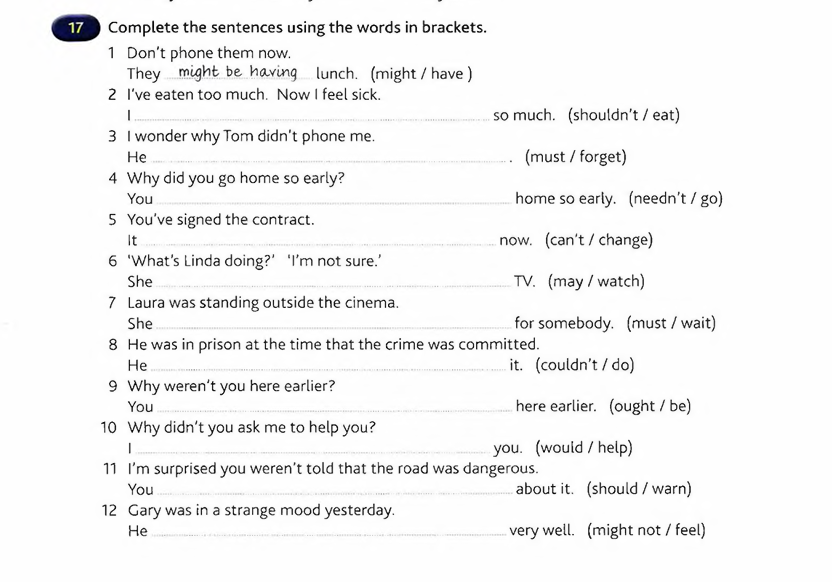
Today is the third class of our current April class period. The start time for our class will be 10:00am. We will begin class with a casual conversation. Our reading today is about defense. Please try to read as much as possible. Underline any words or sentences that are unfamiliar. Our listening is about space. We will finish with our grammar sentences.
Click HERE for the reading
EMILY KWONG: You're listening to Short Wave from NPR.
REGINA BARBER: Hey, Short Wavers, Regina Barber here with my co-host, Emily Kwong.
KWONG: Hi, Gina.
BARBER: Hey, Em. And we also have Ailsa Chang, our beloved colleague--
AILSA CHANG: Aw.
BARBER: --out in LA who hosts All Things Considered in her downtime from talking to us.
CHANG: So much downtime.
BARBER: Yeah.
CHANG: [LAUGHS]
BARBER: We're all here for the latest installment of our, like, news roundup, an episode pulling together some of the most interesting studies we found in scientific journals lately.
KWONG: Yeah, something that's trending on social media that we can do a little truth squadding around.
BARBER: Yup, and this time, we've got a whole range of topics.
KWONG: To start with, Ailsa, what is your relationship to small talk?
CHANG: I actually love small talk because I am amazing at small talk.
KWONG: Uh, I also like small talk.
BARBER: I do like running into you when I visit California. Our first topic is about the worthiness of small talk. Should we do it? Like, how boring is it, really?
CHANG: It's not boring. You have to make it not boring.
BARBER: True, true.
KWONG: Speaking of which, like, how much are you looking forward to a conversation about lobsters?
CHANG: Ooh. Well, I love to eat lobsters.
BARBER: Will you, though, after listening to this science?
KWONG: No, no, no.
CHANG: I don't know. Please, don't take another good thing away from me.
KWONG: We'll hold your claw through it. Don't worry. And we are rounding all of this cool science out with a look at how the Colorado River came to carve the Grand Canyon.
CHANG: Ooh, cool.
[MUSIC PLAYING]
BARBER: Today on the show, scientific research knows no bounds.
KWONG: From small talk to aquatic emotions and ancient history, we'll leave you with no shortage of cutting-edge dinner party conversation.
CHANG: Small talk.
BARBER: Yeah, grab some popcorn for this episode of Short Wave, the science podcast from NPR.
[MUSIC PLAYING]
BARBER: OK, Em, Ailsa, I'm thinking three hosts sitting around, yapping. We're basically contractually obligated to talk to each other about small talk first.
CHANG: Yeah, let's small talk about small talk, because I love small talk. You have to make it not boring. That is up to you. But--
BARBER: We'll do it.
CHANG: --honestly, though, it's never boring with the two of you.
BARBER: Aw. I have a study, though, talking about small talk and what people think of small talk. And I'm going to start with a Seinfeld reference. So there's this famous episode where George and Jerry are sitting in front of, like, a bunch of TV executives, and they're pitching this idea that basically is the concept behind Seinfeld. So here's George pitching it.
[AUDIO PLAYBACK]
GEORGE: I think I can sum up the show for you with one word-- nothing.
SPEAKER: Nothing?
GEORGE: Nothing.
[END PLAYBACK]
KWONG: You can hear the skepticism, right?
CHANG: Uh-huh.
KWONG: This is how a lot of people think about small talk. But we know how funny the show Seinfeld turned out to be.
CHANG: Totally.
KWONG: And in a new study about a similar phenomenon, there was a similar surprise. People think conversations about a boring topic will be boring, but oftentimes, they are wrong.
CHANG: I agree, because this happens all the time on my job. Like, I'm constantly surprised at how not boring some topics end up being.
BARBER: Yeah.
CHANG: You just have to keep an open mind and stay curious.
BARBER: Yeah, totally. I totally agree. And these researchers, they looked into this. They asked a total of 1,800 participants to have conversations that the participants rated as boring. So onions, Pokémon, math. And every time, the participants came out of their short conversations thinking these conversations were more interesting and more enjoyable than they had expected. And this was all published in the Journal of Personality and Social Psychology.
KWONG: And Ailsa, this held true, whether conversations were online or in person with a friend or a stranger. Some participants even said they would be interested in having more conversations about that specific boring topic.
CHANG: Supposedly boring topic.
KWONG: Yes.
CHANG: OK, so what is the takeaway here? Like, I should just lean in and try to enjoy every conversation coming up when someone's talking to me about something that seems boring at first?
BARBER: Maybe, yes.
CHANG: [LAUGHS]
BARBER: So I spoke to--
CHANG: Welcome to my job. No, I'm kidding. [LAUGHS]
BARBER: Yeah, so I spoke to Elizabeth Trent, the lead author of the study, and she mentioned the report put out by the US Surgeon General in 2023 that outlined the loneliness epidemic in our country. And she feels that this could be one of the reasons people seem to enjoy these seemingly dull conversations. And she has some advice for all of us.
[AUDIO PLAYBACK]
ELIZABETH TRENT: So if we avoid talking to someone because we assume it will be boring, like we avoid talking to that coworker at the coffee machine or, you know, a neighbor in the elevator, then we may be unnecessarily depriving ourselves of small moments of connection that could improve our mood and sense of belonging.
[END PLAYBACK]
CHANG: Everybody is potentially interesting.
BARBER: Yeah.
KWONG: Yeah.
CHANG: All right. Well, next topic, lobsters and painkillers. I'm already bracing myself for this one. Like, do I need to give up eating lobsters because they have feelings?
KWONG: It's a little more complicated than that. But if you've ever seen a lobster boiled alive before a dinner, it doesn't look great for them. And that practice has actually been banned in a few places--
CHANG: Oh.
KWONG: --including Switzerland, Norway, and New Zealand, where lobsters have to be stunned before they're boiled with--
CHANG: Whoa.
KWONG: --things like an electric shock or mechanical destruction of the brain with, like, a sharp knife. And this is just because some scientists argue that lobsters and other crustaceans may feel pain when boiled alive.
CHANG: Oh, well, I don't want that. Is that where these painkillers come in?
KWONG: Yes. This study, in Scientific Reports, wanted to know how painkillers affected lobsters, things like aspirin. And they wanted to know how these lobsters responded to an electric shock. But before we get into what the team found, one thing to note-- there's a difference between pain and nociception. Nociception-- that's the process that happens in the brain when there's a negative stimulus, like a shock.
CHANG: Oh.
BARBER: Yeah, and pain is more subjective. It involves the emotional component of discomfort, like how you feel about a sensation.
CHANG: Right, but can you actually ask a lobster how it feels when it's getting boiled? My guess is no.
BARBER: No.
KWONG: Yeah, exactly.
CHANG: So what kind of reactions do they look to?
BARBER: Yeah, so in this case, they weren't boiling any lobsters, actually. So instead, they gave some of them painkillers, including aspirin, lidocaine. And then other lobsters didn't get those medications. And then they gave the lobsters an electric shock.
CHANG: And how did the lobsters react to that shock?
BARBER: Yeah, one thing was that they flipped their tails, which is something lobsters do to swim away from a dangerous thing, like a shock.
KWONG: But the lobsters that got the aspirin or the lidocaine flipped their tails less, which indicates that the painkillers seemed to reduce any pain-like sensations the lobsters experienced, and ultimately suggests that the lobsters likely do experience something.
CHANG: OK, then what does all of this mean for people, like me, who love to eat lobsters? Like, am I supposed to be giving lobsters painkillers when I cook them at home?
KWONG: You could stun them using some of the methods used in other countries, but Lynne Sneddon, one of the study's authors, says do not give them medicine. The painkillers were only a way to see if the lobsters can feel something like pain.
[AUDIO PLAYBACK]
LYNNE SNEDDON: Certainly, do not, under any circumstances, give the crustaceans any painkillers, because if you eat these animals, there's lots of side effects, and you shouldn't do that.
[END PLAYBACK]
KWONG: However, Lynne does hope this work could lead to more humane ways to kill invertebrates, like lobsters, in the future.
CHANG: All right, think of those lobsters, everybody. Now for our last story, which I hear invites us to think about the Grand Canyon.
KWONG: Yeah.
CHANG: That place just takes my breath away.
KWONG: It is so stunning out there. And one of the most enduring controversies among geologists is just, how? Like, how did the Colorado River, you know, travel from Western Colorado through Arizona to create this 277-mile-long canyon that we know and love? And one big piece of the puzzle may be lakes.
CHANG: Hmm.
BARBER: Yeah, big, old lakes that filled up, spilled over millions of years ago, creating a continuous river system, possibly contributing to the modern-day course of the Colorado River. This new evidence is published in the journal Science.
CHANG: Wait, but how do you gather evidence from ancient lakes-- I presume that these are lakes that no longer exist, right?
KWONG: Yeah, geology, it's a lot like cold case forensics. You're piecing together what happened a very long time ago. And one of the lead detectives on this case was John He at the University of California, Los Angeles. He and his collaborators gathered sediment a little over 100 miles from the Grand Canyon, in a place called the Bidahochi Foundation.
[AUDIO PLAYBACK]
JOHN HE: Imagine you go out to a riverbank, and then you scoop up a handful of sand. And in that handful, there's probably also a couple hundred or even thousands of microscopic grains of zircon, each of which is like a vault of information about where it came from.
[END PLAYBACK]
BARBER: John and his team used uranium lead dating to trace the history of these zircon crystals, and they found that the pattern of crystal ages from the Bidahochi Formation was a very close match to the early deposits of-- you guessed it-- the Colorado River.
KWONG: Which essentially filled in a missing piece of the Colorado River's ancestral path, a moment in time from 6.6 million years ago that would have eventually help carve the Grand Canyon.
CHANG: That is so cool.
KWONG: Yeah.
[MUSIC PLAYING]
KWONG: Ailsa, it is always a party when we have you.
CHANG: Aw.
KWONG: It's just-- it's awesome.
BARBER: Yes. Thank you for coming.
CHANG: Thank you.
KWONG: Thank you for considering the lobster with us from the edge of the Grand Canyon.
BARBER: Yeah. Thank you. Thank you for coming.
CHANG: Thank you to both of you.